Stock Options
A very different way to use the stock market: get paid to wait, instead of buying and hoping.
What is a stock?
When corporations go public, they issue stock on an exchange. When investors buy that stock, they're contributing funds that help the company grow. In return, shareholders may have the right to vote at shareholder meetings, receive any dividends the company announces, and sell their shares to other investors.
How stock investing works
Investors buy stock at a price set by current market conditions. If the price goes up, they can sell for a profit. If the price goes down, they may take a loss if they choose to sell at the lower value. Most people only ever use the market this way: buy, hope and wait.
Stock options: a very different game
Traditional stock investing depends on guessing where prices will go. Options give you another way to use the market, where you can be paid to wait.
An option is a contract. It gives the buyer the right, but not the obligation, to buy or sell a stock at a set price by a set date. The buyer pays for that right up front. That payment is called the premium.
Most people who hear "options" picture fast, risky bets on where a stock is headed. Martin's approach takes the other side of the trade. He sells options and collects the premium, the way an insurance company collects premiums on the policies it writes. He isn't trying to predict the market's next move. He follows clear rules about what to sell, when, and when to sit still, and uses them to create monthly income from capital he already has.
The main purpose: income from capital you already have
The point of selling options isn't to get rich on one trade. It's to turn a portfolio that normally just sits and waits into one that pays you while it waits. Think of it as renting out your capital: you agree to buy or sell a stock at a price you'd already be happy with, and you're paid a premium for making that promise.
If the stock never reaches that price, the contract expires and you keep the premium. If it does, you buy or sell at the price you chose in advance, and you still keep the premium. Either way, you knew the outcome before you placed the trade.
Why investors get excited about it
You're paid to wait
Instead of buying and hoping, you collect income up front. The premium is yours as soon as the trade is placed.
Rules, not predictions
You don't need to call where the market goes next. A clear set of rules decides what to sell, when, and when to sit still.
Buy stocks at a discount
Selling a put lets you name the lower price you'd be glad to pay for a company you like, and get paid while you wait for it.
Income that funds the next move
Monthly premiums can build toward something bigger, like the down payment on an investment property. That's how options fit into Martin's overall plan.
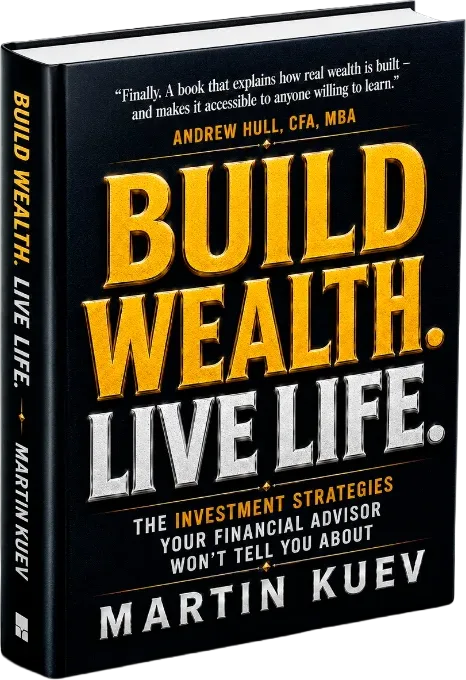
How Martin covers options in Build Wealth. Live Life.
Stock options are one of the four strategies in Martin's book, alongside real estate, infinite banking with whole life insurance, and Bitcoin. He walks through his own rules step by step: how selling options works in plain language, how it differs from buying and holding shares, the risks to respect, and how the income can help fund the next strategy, like the down payment on a property.